Why Bearings Fail Early in Food & Beverage Equipment:Fretting Wear & Cloud-Like Wear Marks

A detailed root cause analysis of two common premature bearing failure modes on food and beverage production lines — inner ring fretting wear and lubrication breakdown. THB’s technical team presents systematic solutions across installation integrity, structural design, and lubrication strategy to help manufacturers reduce unplanned downtime while protecting product safety and hygiene.
On food and beverage production lines, reliable bearing operation is essential for both production continuity and product hygiene safety. Even with regular maintenance, bearings can still fail prematurely due to installation fit issues or demanding operating conditions, resulting in unplanned downtime and higher maintenance costs.
Recently, THB’s technical team conducted an in-depth investigation of a bearing failure on a customer’s food and beverage production line. Through physical inspection and engineering simulation, we identified the two primary root causes and developed targeted optimization solutions.
Finding 1: Excessive Inner Ring Clearance Leading to Fretting Wear
Failure Phenomenon
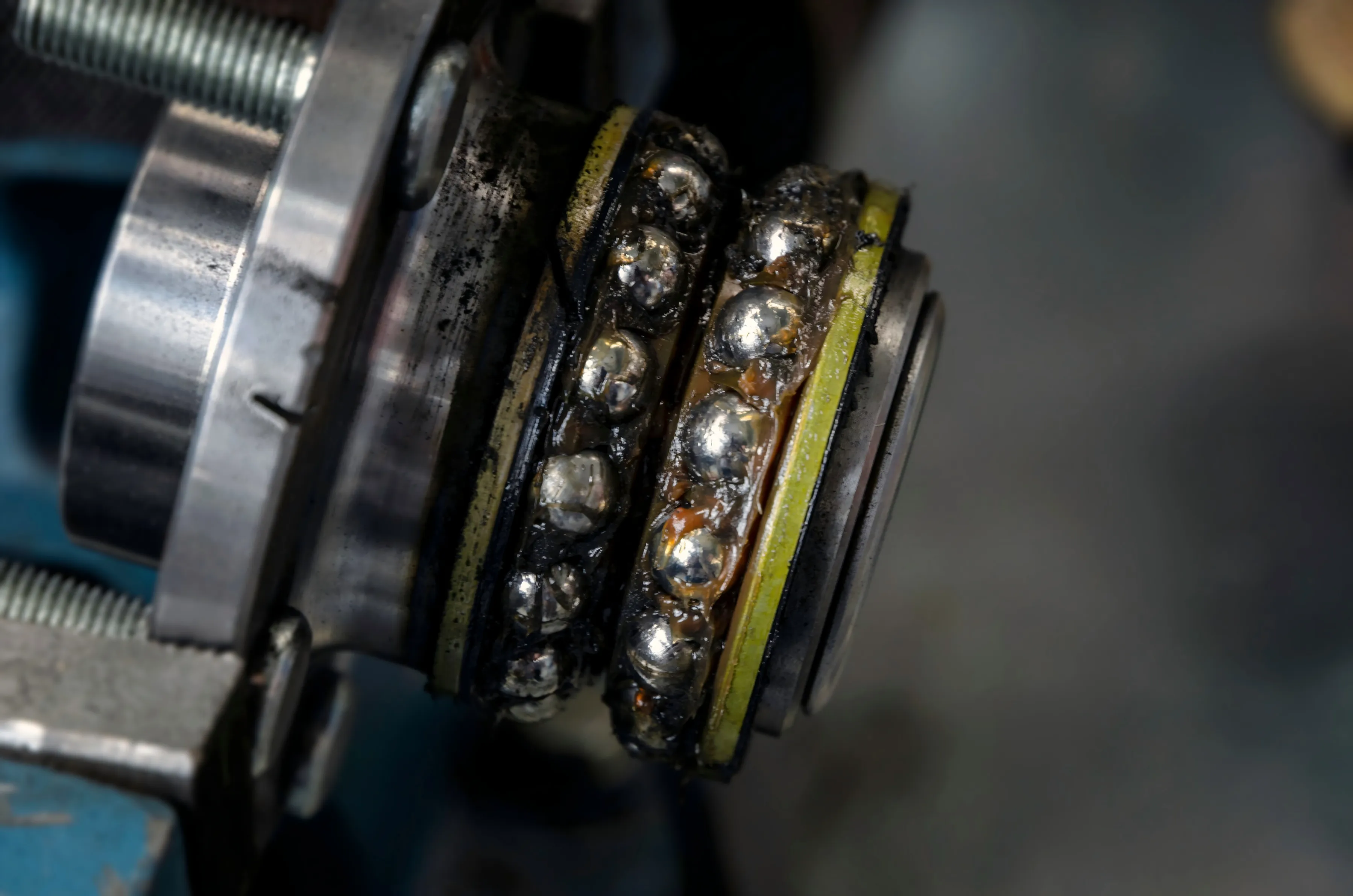
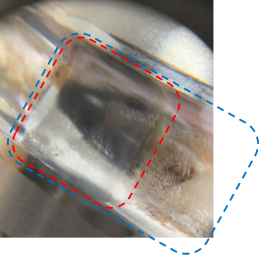
Disassembly inspection revealed clear fretting wear on the mating surfaces between the inner ring bore and the shaft, indicating that micro-slip had occurred between the inner ring and shaft during operation.
Reason
The bearing had been selected for point-load conditions, under which a relatively loose fit between the inner ring and shaft is theoretically acceptable. However, the actual clearance was excessive. Under continuous load, this allowed subtle relative movement between the inner ring and shaft. Over time, the repeated micro-motion produced characteristic fretting wear damage on the contact surfaces.
Impact on Equipment
Once fretting begins, the bearing mounting loses positional stability. Load distribution across the rolling elements becomes inconsistent, accelerating raceway wear and significantly shortening service life. The resulting vibration and abnormal noise also compromise production line stability and product consistency.
Finding 2: Shaft Deflection Combined with Low-Load Reciprocating Motion Causing Lubrication Failure
Failure Phenomenon
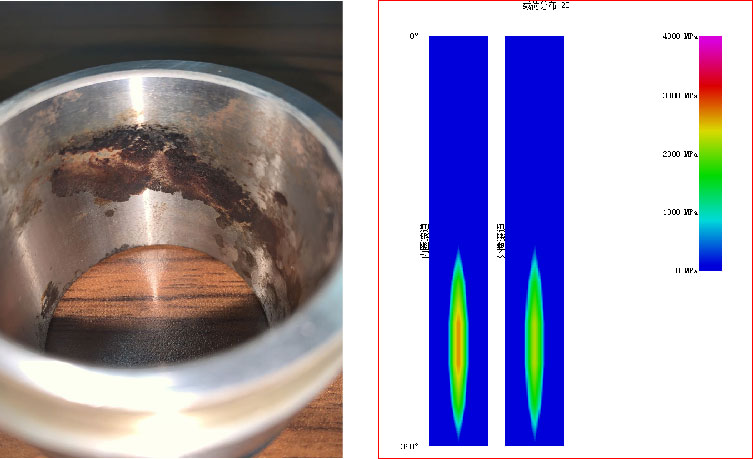
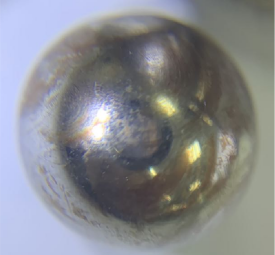
Cloud-like wear patterns appeared across the inner ring raceway and ball surfaces, with wear extending nearly the full width of the working surface. This indicated highly abnormal ball motion trajectories within the raceway.
Reason
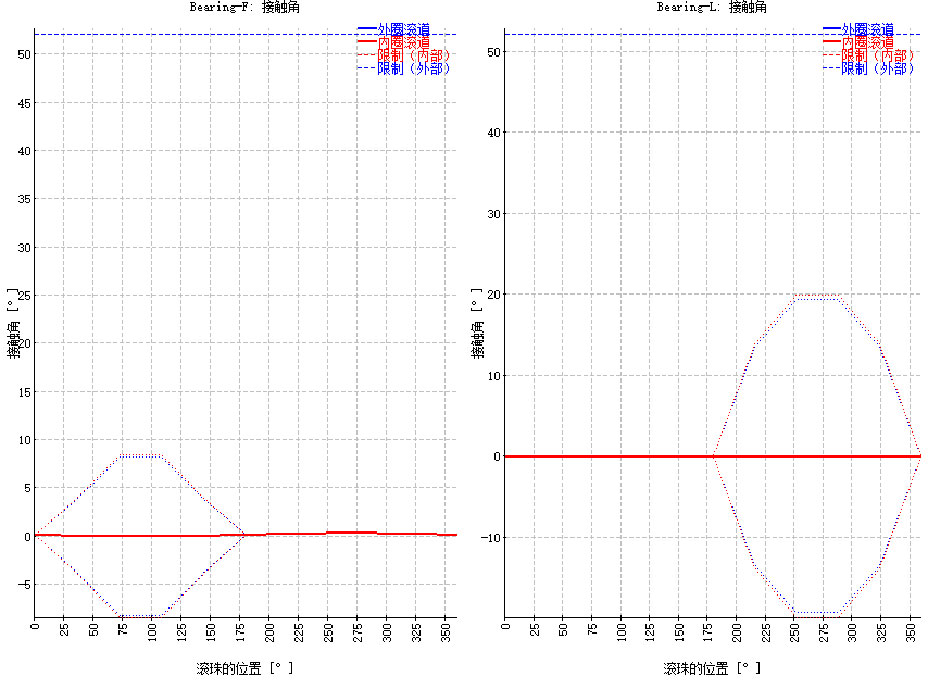
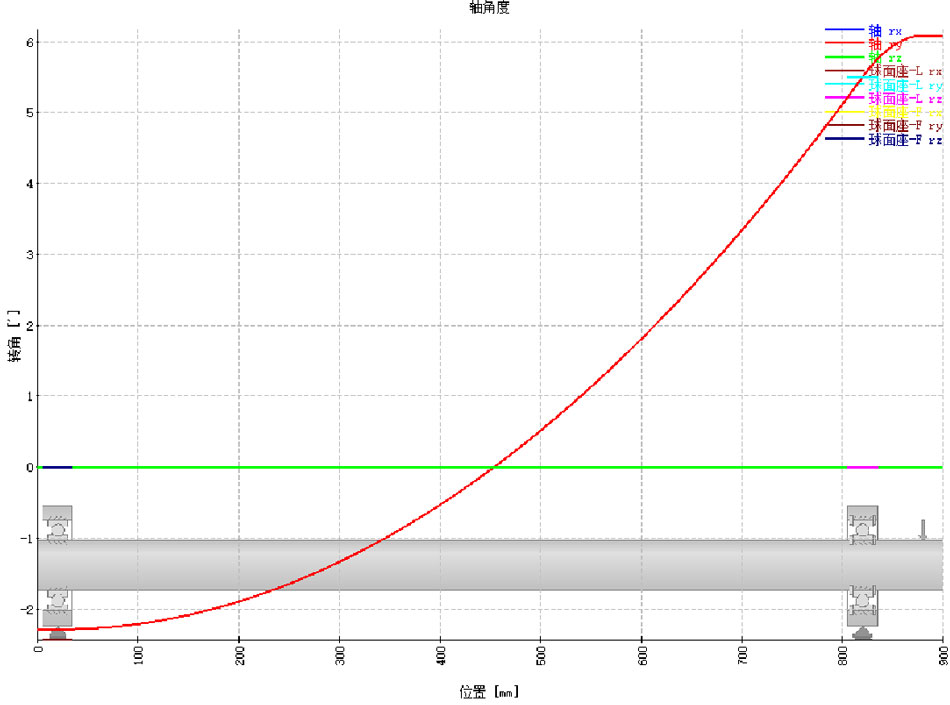
Engineering simulation showed that shaft deflection during operation shifted the bearing’s rotational centerline. As a result, the balls were forced into complex S-shaped or crossed (spectacle-like) trajectories. At the same time, this section of the equipment operated under low-load, frequent start-stop reciprocating motion. Under these conditions, it is extremely difficult to maintain a stable lubricant film. Every direction change ruptures and shears the oil film, rapidly degrading the grease and ultimately leading to surface fatigue spalling on the raceway.
Impact on Equipment
Lubrication failure causes direct metal-to-metal contact between balls and raceway, dramatically accelerating wear. Wear debris contaminates the remaining grease, creating a self-reinforcing degradation cycle. Beyond premature bearing failure, this can lead to increased vibration, abnormal temperature rise, and severe unplanned production line stoppages that disrupt efficiency and delivery schedules.
THB Systematic Optimization Solutions
To address these two core failure mechanisms, THB proposes systematic solutions across three dimensions: installation reliability, bearing structural optimization, and lubrication protection.
1: Secure the Inner Ring with a Locknut Locking Mechanism
We recommend incorporating a locknut locking device to positively secure the inner ring to the shaft. This eliminates relative micro-motion at the source, directly resolving the fretting wear problem caused by excessive clearance.
2: Optimize Inner Ring-to-Shaft Fit Tolerance
Adopt a more precise transition fit tolerance. This improves centering accuracy and resistance to fretting while maintaining assembly convenience, thereby reducing the risk of inner ring slip and extending bearing service life.
3: Optimize Raceway Conformity Design
Implement a higher-conformity raceway groove design. This increases the contact area between the balls and raceway, reduces contact stress, and improves ball motion stability under shaft deflection and reciprocating motion conditions.
4: Select Bearings with Increased Radial Clearance (C3 or Larger)
Specify C3 or greater internal radial clearance. The additional clearance provides greater freedom for ball movement under complex trajectories, better compensates for shaft deflection effects, improves load distribution, and reduces the risk of edge loading and premature fatigue.
5: Apply High-Performance Grease Tailored to Operating Conditions
For low-load reciprocating and frequent start-stop applications, select greases containing solid lubricants or anti-wear additives. These provide effective boundary lubrication protection when full electrodynamics films are difficult to maintain.
Bearing failures are rarely caused by a single component defect. They almost always result from a systemic mismatch between the actual operating conditions, mounting specifications, and lubrication strategy.
A clear understanding of the underlying failure mechanisms is the foundation for any effective improvement plan. Solutions must be evaluated and tailored to the specific conditions of each production line — there is no universal fix that applies to all applications.

THB Bearing
Professor
Infomation
Tags
Published
Author
Share
Contents
Subscribe to THB Blog
Stay connected with THB
and receive new Blog posts in your inbox