Four-Way Shuttle Wheel Units: Why Integrated Wheelsets Outlast Multi-Part Assemblies

Four-way shuttles put wheel units through one of the harshest duty cycles in intralogistics: combined loads, continuous operation and rapid start-stop motion at high acceleration. This article explains why conventional multi-part wheel units fail first — and how the THB WSD/WSN integrated wheelset answers with a deliberate sequence of design choices: the right structure first, the right material last.
1. The duty cycle that decides everything
A four-way shuttle never really "rests". During a single shift, it may complete hundreds of storage and retrieval cycles: accelerating hard out of a rack position, braking sharply at a lift or transfer point, reversing direction, and starting all over again — often around the clock.
This combination — combined loads, continuous operation, reciprocating motion with rapid start-stop and hard braking, all at high speed and high acceleration — is one of the most demanding duty profiles in intralogistics. And it shows on the component that touches the rail first: the wheel unit.
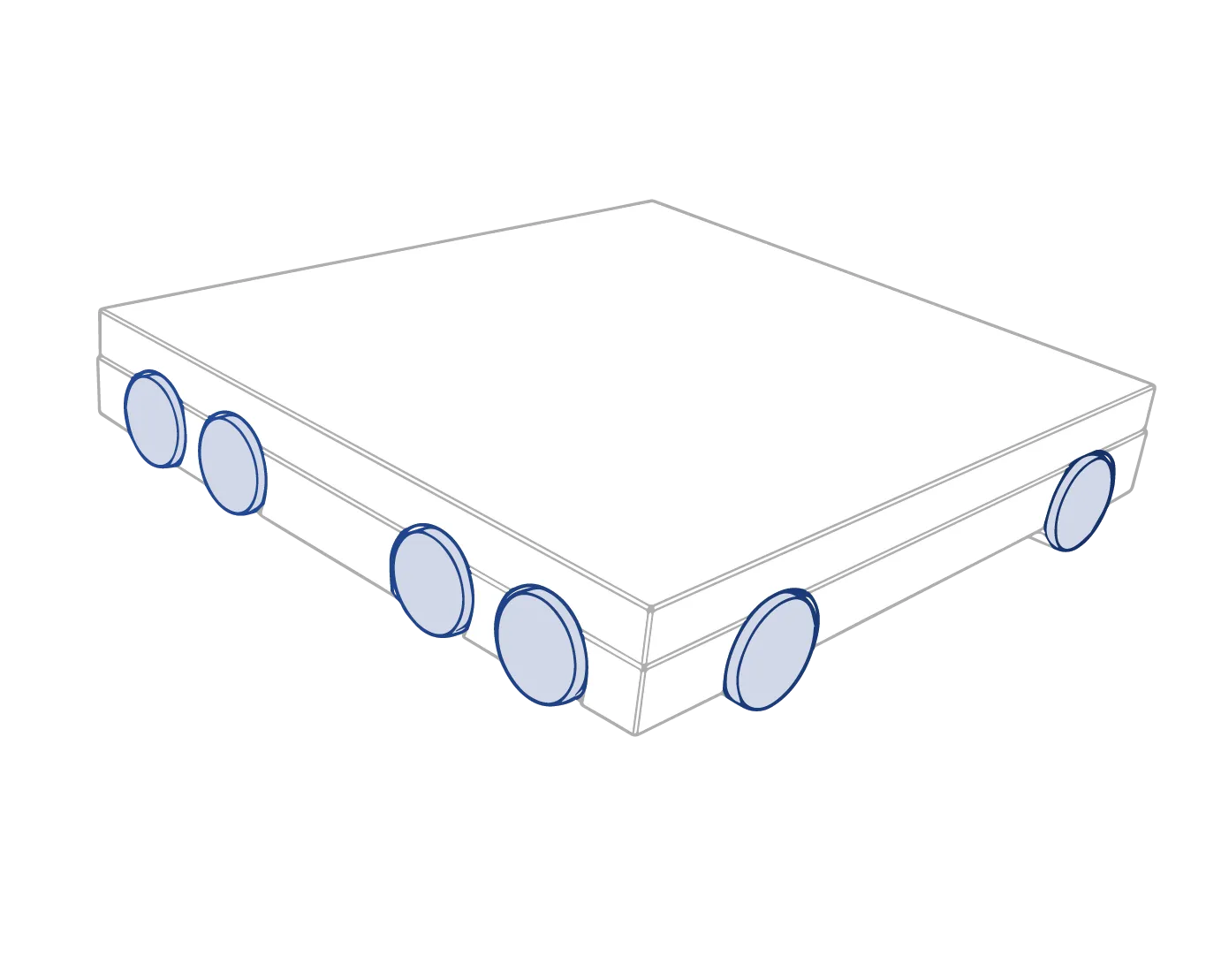
A four-way shuttle changes direction freely inside the racking — every direction change is another start-stop cycle for its wheel units.
2. Why the wheel unit fails first — a structure and material problem
In practice, we see the same three problems reported again and again by shuttle builders:
Outer PU wheel wear
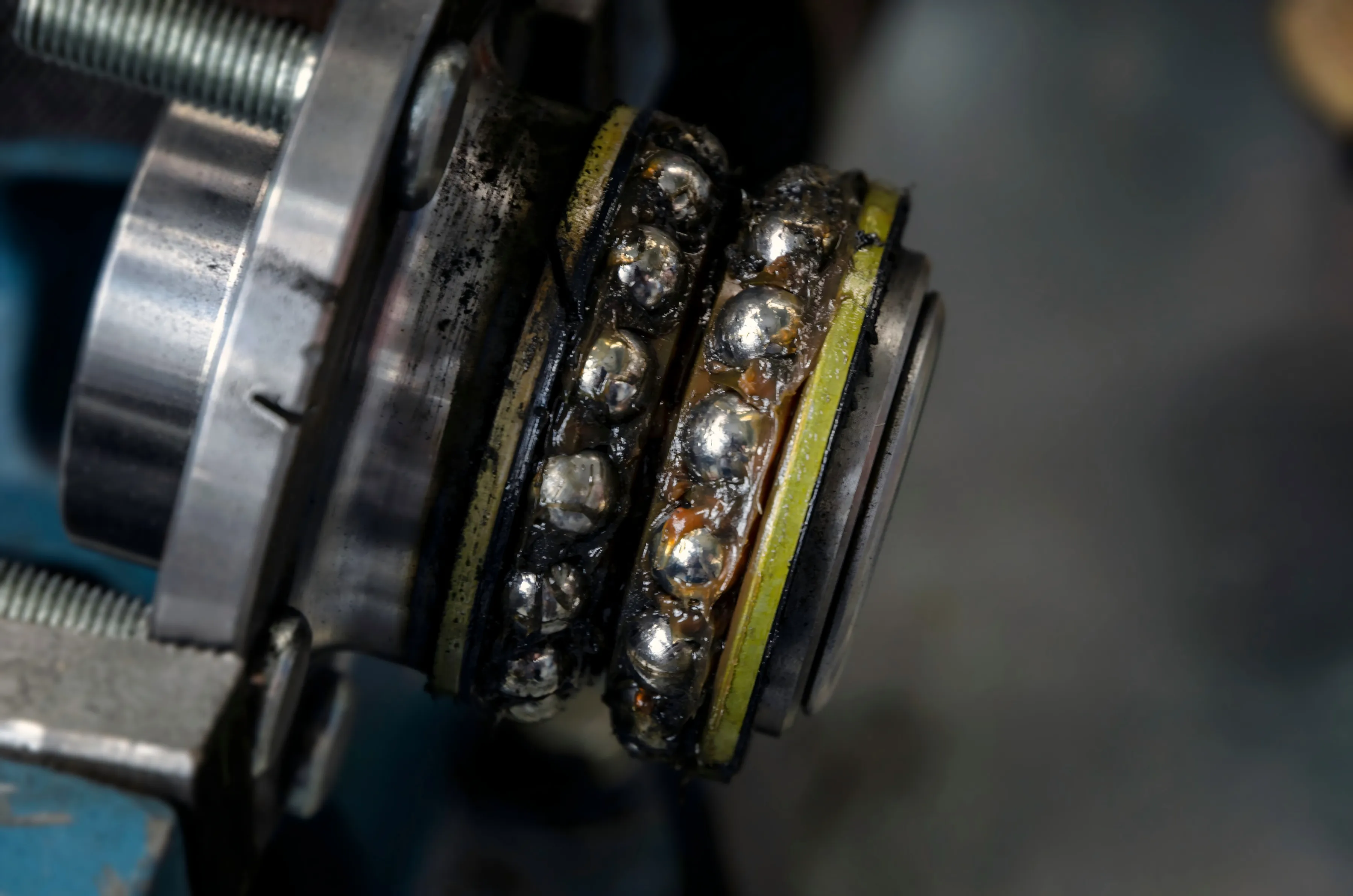
Under rapid start-stop cycles, the running surface of a conventional PU wheel is stressed far beyond what the material can comfortably handle. Once wear sets in, ride quality drops, the track suffers, and replacement follows — often repeatedly.
Complex multi-part structures
A conventional wheel unit bundles many individual parts — wheel, bearing, shaft, fasteners — into a complicated assembly. Installation is fiddly, replacement is time-consuming, and every additional part is an additional failure point.
High overall costs
Wear and complexity compound each other: frequent replacement, unplanned downtime and the engineering time spent on wheel issues add up to a lifetime cost that is far higher than the purchase price of the wheel unit itself.
The root cause behind most of these issues is not misuse. It is selection: a wheel structure and a running surface material that were never designed for this duty cycle. Solving the problem therefore starts where the problem starts — with the right structure, and the right material.
3. The integrated answer: the structure
The THB integrated wheel unit for four-way shuttles (WSD / WSN series) addresses the structural half of the problem with two deliberate design decisions.
Dedicated bearings, engineered into the unit
Each unit carries dedicated bearings with a load capacity of up to 5 t. The bearing is part of the design itself — matched to the wheel and the shaft inside the unit, not assembled from separately sourced parts.
A minimalist, compact, integrated internal design
Bearing, shaft and wheel are built into a single standardized unit, with standardized structural interfaces and standardized wheel dimensions. What used to be a complicated multi-part assembly becomes one coherent component.
| Aspect | Conventional multi-part wheel unit | THB i. ntegrated wheel unit (WSD / WSN) |
| Bearing matching | Selected and verified separately by the user | Dedicated bearings engineered into the unit, load capacity up to 5 t |
| Structure | Many individual parts, complicated assembly | Single standardized unit, standardized interfaces and wheel dimensions |
| Installation | Fiddly, time-consuming | Simple mounting, minimal procedures |
| Failure risk | One more part, one more failure point | Fewer parts, lower failure risk |
4. What this means for selection and installation
Selection becomes simpler
Because the bearings are already matched to the unit, no additional bearing verification is required from the user — the engineering decision reduces to choosing the right size and the right output shaft.
Installation becomes shorter
The integrated unit mounts with minimal procedures, which means less time on installation and replacement, lower risk of assembly errors, and a lower time cost over the life of the shuttle. When a wheel unit eventually needs replacing, the swap is straightforward — and the standardized dimensions mean the same interface carries across the range.
The drive side is covered too
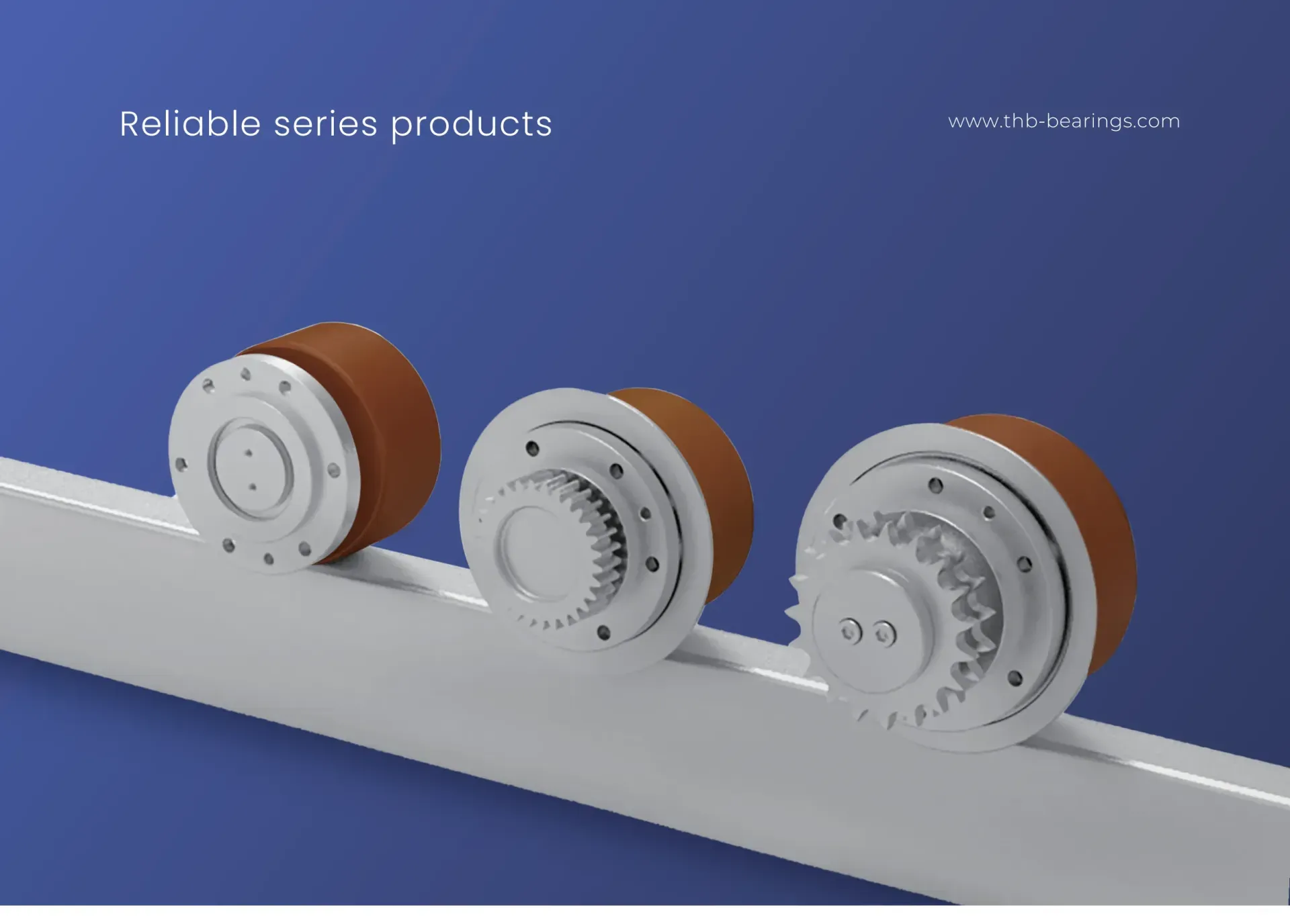
A diverse range of output shaft types matches virtually every common transmission form: chain and sprocket drive, gear drive, and gearbox drive.
- Drive wheel: long shaft, short shaft, sprocket shaft, gear shaft, sprocket with square key, gear with square key
- Driven wheel: matched flange design for non-driven positions
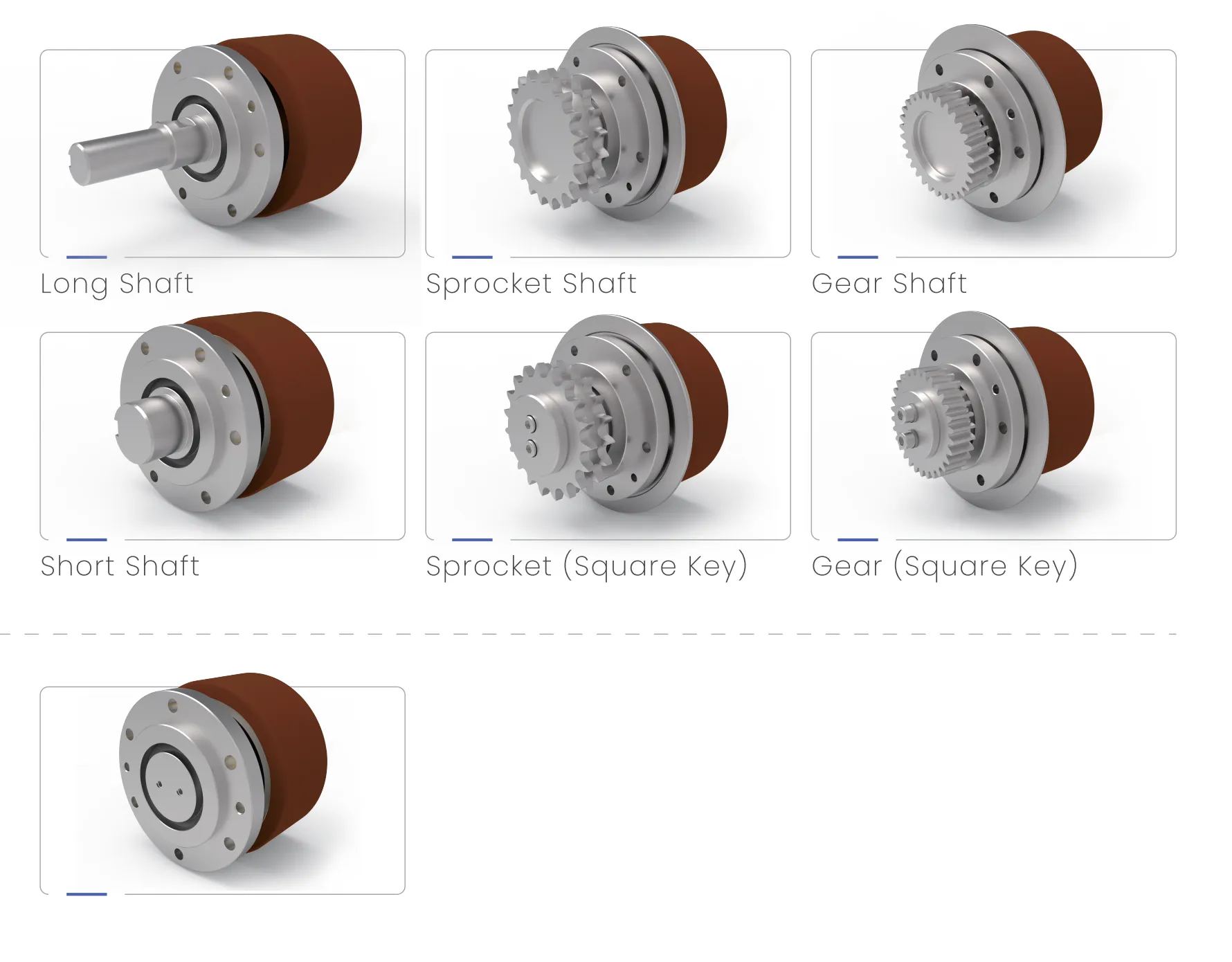
One wheel unit platform, every common transmission form: drive wheel shaft types (top) and the driven wheel (bottom).
5. The running surface: a material chosen for the duty
The structural decisions above answer half of the problem. The other half is the surface that meets the rail every cycle.
This is where material selection matters, and where many conventional units stop short. The THB wheel unit uses NDI — a material selected, in the same deliberate way as the structure and the bearings, for what this duty cycle actually demands: excellent mechanical performance, high toughness and superior dynamic performance.
In service, this translates into higher wear resistance and a longer service life, smooth and quiet running, and a wheel that protects the track and holds steady even under rapid acceleration and deceleration. It is a considered engineering choice — one of several made across the unit — rather than a shortcut.
6. Durability is decided at the design stage
For a component that endures hundreds of start-stop cycles a day, durability is not a feature you can add later. It is decided at the design stage — in the structure that holds the unit together, and in the material that faces the rail.
The THB WSD / WSN integrated wheel units are designed for 1–5 t four-way shuttles, standard and customized. If shuttle wheel wear is on your engineering agenda, we are ready to talk through your application.
The complete WSD / WSN series overview — technical specifications, output shaft options and wheel materials, all in one PDF.

THB Bearing
Professor
Infomation
Tags
Published
Author
Share
Contents
Subscribe to THB Blog
Stay connected with THB
and receive new Blog posts in your inbox